 Personal Brand Authority Building — Daily Brief
The Creator Economy Split: Why Lawyers Are Building Authority While Influencers Chase Cameras
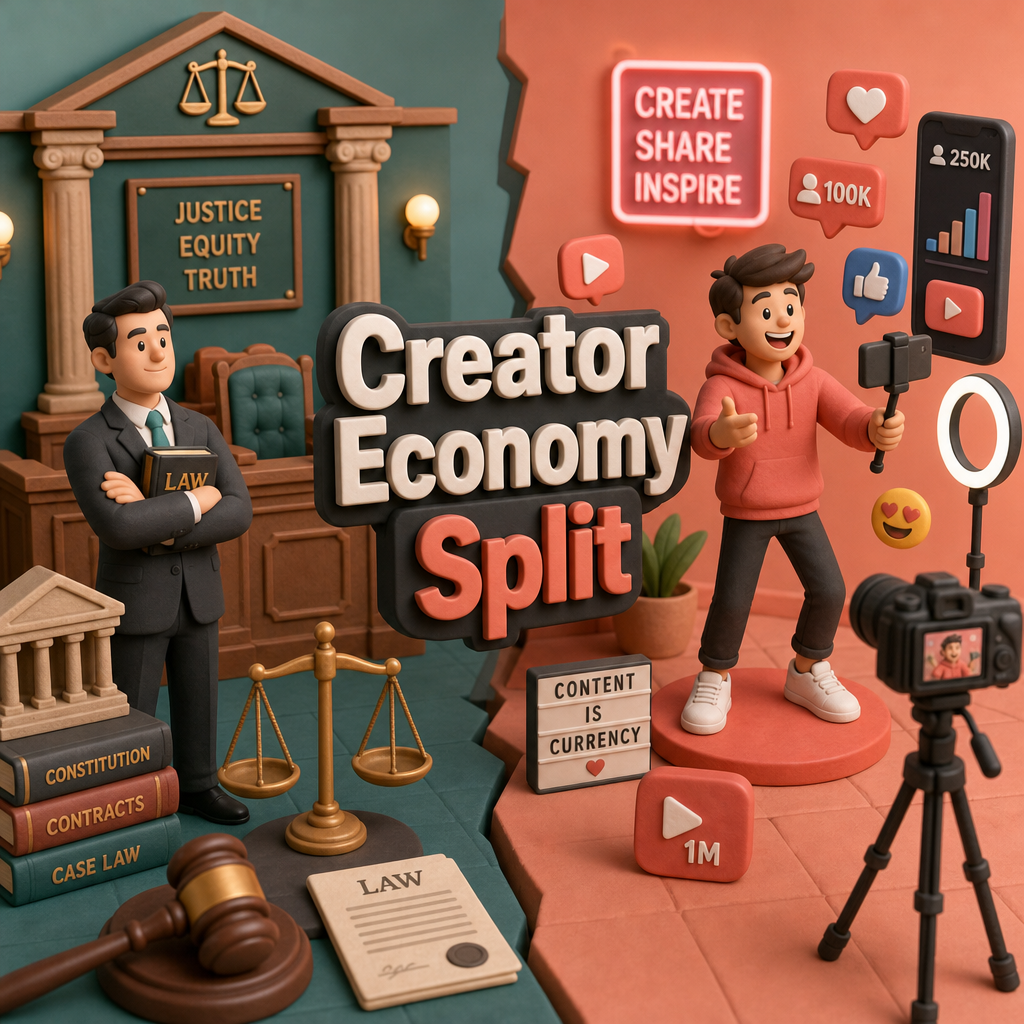
Two parallel worlds are calling themselves the same thing — and only one is building real professional power.
Something strange happened this month. Passle launched an AI suite designed to help lawyers publish more thought leadership and raise firm visibility in AI search. The same week, the American Film Market added a dedicated creator economy panel to its opening-day summit, and Syracuse University's CUSE Creator Con emphasized that the creator economy means more than on-camera talent.
Two completely different professional worlds are using the exact same vocabulary. One group is building authority to generate consulting pipelines and board seats. The other is optimizing for views, brand deals, and platform algorithms.
Both call themselves creators. Both talk about building personal brands. Both are publishing content to grow their influence.
But they're playing entirely different games — and confusing the two will cost you years of misdirected effort.
The vocabulary collision hiding two separate economies
When Fast Company published 148 ideas for overcoming personal branding's biggest challenges, they were writing for professionals who need to control how people think about them in boardrooms and pitch meetings. When The Hollywood Reporter traced how the creator economy evolved from its origins in adult entertainment, they were documenting an entirely different lineage — one rooted in audience monetization and platform dependency.
The language overlap isn't accidental. Professional services firms saw the success of digital creators and borrowed the terminology. Law firms, consulting practices, and B2B executives started calling their marketing efforts "content creation" and their partners "thought leaders."
But the underlying economics are inverted.
Digital creators build audiences first, then monetize through sponsorships, platform revenue shares, and product sales. Their authority comes from reach. A creator with 500,000 followers can command brand deals regardless of their depth of expertise on any single topic.
Professional creators build expertise first, then use content to make that expertise visible. Their authority comes from demonstrable skill. A fractional CMO with 500 connections can command six-figure consulting fees if the right 50 people see proof of their strategic thinking.
One model scales through attention. The other scales through trust.
Why law firms are investing in AI-powered thought leadership
Passle's new AI suite targets a specific problem: lawyers have deep expertise but struggle to publish consistently. The platform helps them turn their knowledge into visible thought leadership that surfaces in AI search results.
This isn't about going viral or building a lifestyle brand. Law firms don't need millions of impressions. They need the general counsel at three target companies to see their partner's analysis of a recent regulatory change and think, "We should bring them in for the RFP."
The economics support this approach. A single consulting engagement or retained client relationship can generate more revenue than a thousand LinkedIn likes. The challenge has never been building an audience — it's been making expertise findable at the exact moment a decision-maker needs it.
That's why AI search visibility matters for this segment. When an executive asks an AI assistant about a complex SaaS pricing strategy or a CFO searches for analysis on a new accounting standard, the professionals whose insights surface in those results win the consideration set.
Syracuse University's Creator Economy Minor reflects this bifurcation. According to Syracuse University Today, the program builds business skills behind the content — recognizing that sustainable creator careers require more than just knowing how to shoot and edit video.
But "business skills" means different things depending on which creator economy you're in. For digital creators, it means understanding sponsorship contracts, platform analytics, and audience retention curves. For professional creators, it means translating expertise into authority signals that drive pipeline.
The three authority-building patterns that actually generate consulting work
If you're a fractional executive, ex-consultant, or senior IC trying to build a board portfolio or advisory practice, you're not competing with YouTube creators for attention. You're competing with other experts for credibility.
Three patterns separate professionals who generate real pipeline from those who just accumulate followers:
Pattern one: Specificity over reach. The cybersecurity thought leadership agencies profiled by IT Security Guru don't help clients build mass audiences. They help them become the recognized voice on specific technical problems that enterprise buyers are trying to solve. A CISO researching zero-trust architecture doesn't need a generalist with 100,000 followers. They need the person who wrote the framework their team will actually implement.
Pattern two: Byproduct publishing. The lawyers using Passle's tools aren't creating content for content's sake. They're documenting insights that emerge from their actual client work. The CFO who writes about a complex revenue recognition issue they just solved for a client isn't performing — they're sharing evidence of real expertise. That evidence compounds differently than manufactured thought leadership.
Pattern three: Search-optimized authority. When Passle talks about raising firm visibility in AI search, they're acknowledging a shift in how buyers discover expertise. Decision-makers increasingly start with questions posed to AI assistants, not keyword searches or social feeds. The professionals whose analysis and frameworks get cited in those AI responses build authority without ever touching a camera or chasing platform algorithms.
"Decision-makers increasingly start with questions posed to AI assistants, not keyword searches or social feeds. The professionals whose analysis gets cited in those responses build authority without ever touching a camera."
The Financial Times published a letter defending the creator economy against critics who brand its excesses unfairly. The letter makes a fair point about the legitimate economic opportunities in digital creation. But it's addressing a different audience with different goals.
If your objective is a fractional executive role, an advisory board seat, or a consulting practice that generates $500K+ annually, the digital creator playbook will lead you astray. You'll spend time optimizing for metrics that don't convert to your actual business outcomes.
Where the two economies genuinely overlap
The split isn't absolute. Some patterns work across both models.
Consistent publishing builds compounding visibility regardless of your audience type. Whether you're trying to reach enterprise buyers or consumer followers, showing up regularly with valuable insights creates more opportunities than sporadic genius.
Authentic voice matters in both contexts. The professionals who generate real consulting pipeline don't sound like corporate press releases. They write the way they think, with the specificity and edge that comes from having actual opinions formed through real experience. Digital creators call this "being relatable." Professional creators call it "demonstrating judgment."
Distribution still determines impact. The sharpest analysis generates zero business value if it lives in a Google Doc on your laptop. Both digital and professional creators need to understand where their target audience makes discovery and consideration decisions.
But even these overlapping principles play out differently. A digital creator publishes daily to feed platform algorithms and stay top-of-mind with followers. A professional creator publishes when they have something worth saying to decision-makers who remember substance over volume.
A digital creator optimizes for shares and comments because engagement metrics determine reach. A professional creator optimizes for the silent save and the private forward — the VP who bookmarks your framework or the executive who emails your analysis to their team without commenting publicly.
A digital creator builds across platforms to capture different audience segments. A professional creator goes deep on one or two channels where their specific buyers actually spend time evaluating expertise.
What this means for your authority-building strategy
If you're building toward fractional executive work, advisory roles, or an independent consulting practice, clarity on which game you're playing determines every tactical decision.
Stop measuring success by follower counts or post impressions. Those metrics optimize for the wrong outcomes. Instead, track:
- How many qualified inbound conversations your content generates per quarter
- Whether decision-makers at target companies can articulate your specific expertise when asked
- How often your frameworks or analysis get referenced in actual buying conversations
- The percentage of your content that remains relevant and findable six months after publication
Ignore most creator economy advice about posting frequency, video-first content, and algorithm hacks. Those tactics serve attention-driven business models. Your model runs on trust-driven deal flow.
Focus instead on making your expertise findable, credible, and memorable when someone needs exactly what you know. That means:
Publishing specifics, not generalities. Write about the actual problems you've solved with enough detail that readers can assess your depth. The VP evaluating fractional CMOs doesn't need your hot take on marketing trends. They need to see evidence you've built pipeline generation systems in companies like theirs.
Optimizing for AI discovery. As Passle's focus on AI search visibility suggests, the next wave of authority-building happens in LLM training data and AI-powered research tools. Detailed analysis, original frameworks, and well-structured insights surface in AI results. Viral takes and engagement bait don't.
Building byproduct content systems. The lawyers using Passle aren't adding content creation to their workload. They're capturing insights already emerging from their work. If creating content feels like a separate job, you're doing it wrong. The best professional content documents thinking you're already doing.
Choosing channels by buyer behavior, not creator trends. LinkedIn matters for B2B executives because decision-makers use it for professional research. Substack matters for deep expertise because serious buyers read long-form analysis. TikTok matters for consumer creators. Choose based on where your specific buyers evaluate expertise, not where creator gurus tell you to post.
The creator economy vocabulary will keep bleeding across both models. More professionals will call themselves creators. More platforms will promise to "amplify your personal brand."
But the underlying economics remain distinct. One path builds audiences to monetize attention. The other builds authority to generate trust-driven business.
Knowing which game you're playing determines whether your content investment compounds into real professional leverage or just a feed full of posts nobody remembers.
The lawyers working with Passle understand this. They're not trying to become influencers. They're making expertise findable at the exact moment someone needs to hire it.
That's the only creator economy metric that matters if you're building toward fractional roles, advisory work, or an independent practice. Everything else is just noise borrowed from a different game.