⚡ Breaking - SpaceX Acquires Nationwide 800MHz Spectrum Licenses; Big Three Telecom Stocks Plunge Over 6% After Hours
📰 BREAKING
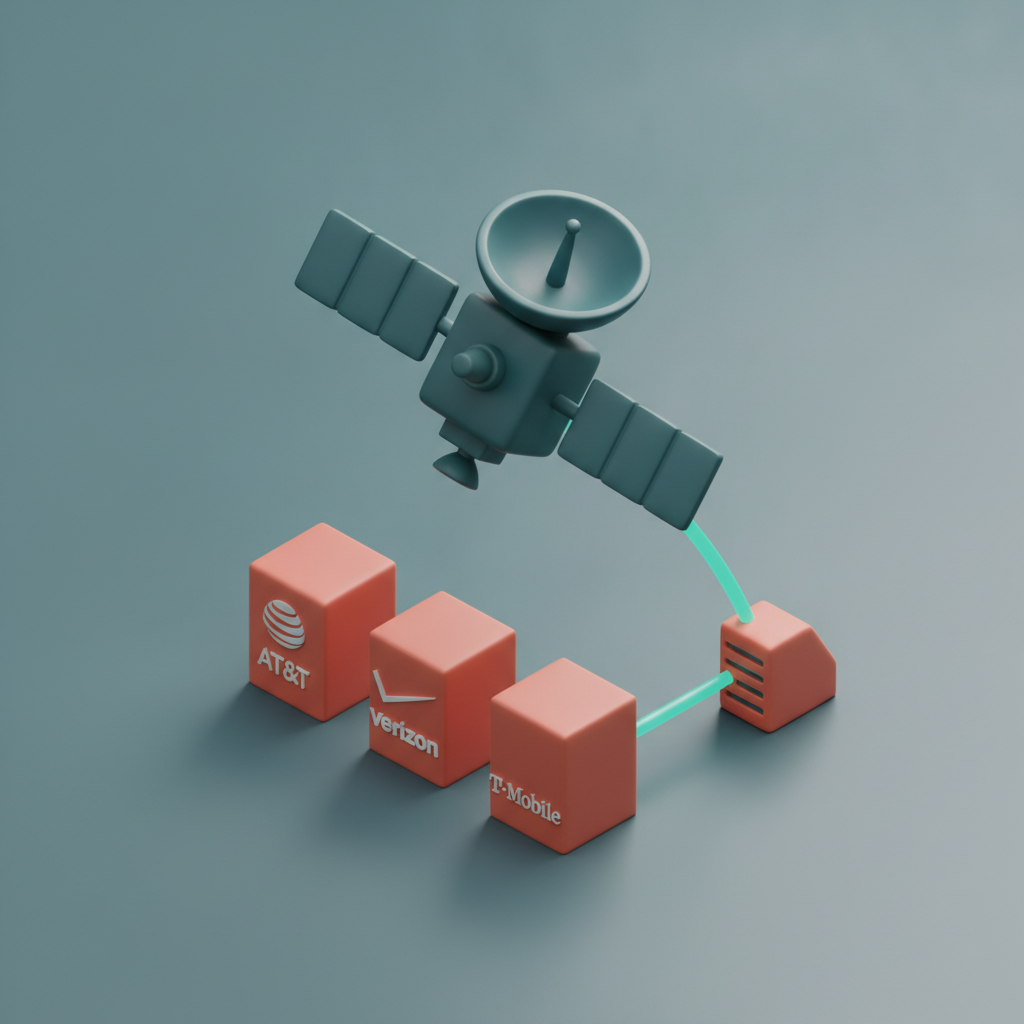
Six percent. That's how much AT&T, Verizon, and T-Mobile shed in after-hours trading the moment SpaceX's 800MHz acquisition hit the wire—$18 billion in combined market cap erased before most executives had left the office.
The shock isn't spectrum scarcity. It's category collision. A launch provider with 5,400+ low-earth-orbit satellites and zero legacy infrastructure debt now holds nationwide sub-1GHz propagation—the physics that let signals penetrate buildings and span rural geographies where fiber economics collapse. SpaceX didn't buy capacity. It bought the ability to bypass every carrier moat: tower leases, backhaul contracts, local permitting gridlock.
Three mechanics matter here.
First, 800MHz sits in the "beachfront" band—coverage range four times deeper than mid-band 5G, which means one SpaceX ground station can replace a dozen macro sites. The capex delta alone redefines what competitive parity costs.
Second, integrated satellite backhaul eliminates the $40–70 wholesale transport fee carriers pay per site per month in thin markets. In Myanmar and across Sub-Saharan Africa, I watched MNOs walk away from 30% of target geographies because backhaul ate margin. SpaceX just made that constraint optional.
Third timing: this lands as enterprises in fintech and logistics are rebuilding for edge AI inference—use cases that need reliable last-mile connectivity, not peak speed. A vertically integrated sat-terrestrial play speaks directly to that brief.
The real tell? If a non-telco can acquire this spectrum, who else is underwriting a similar move—and which incumbent balance sheets can actually defend against patient, infrastructure-native capital?