⚡ Breaking - Personal AI Agents Are Great—Until They Share Your Bank Statement in the Work Chat
📰 BREAKING
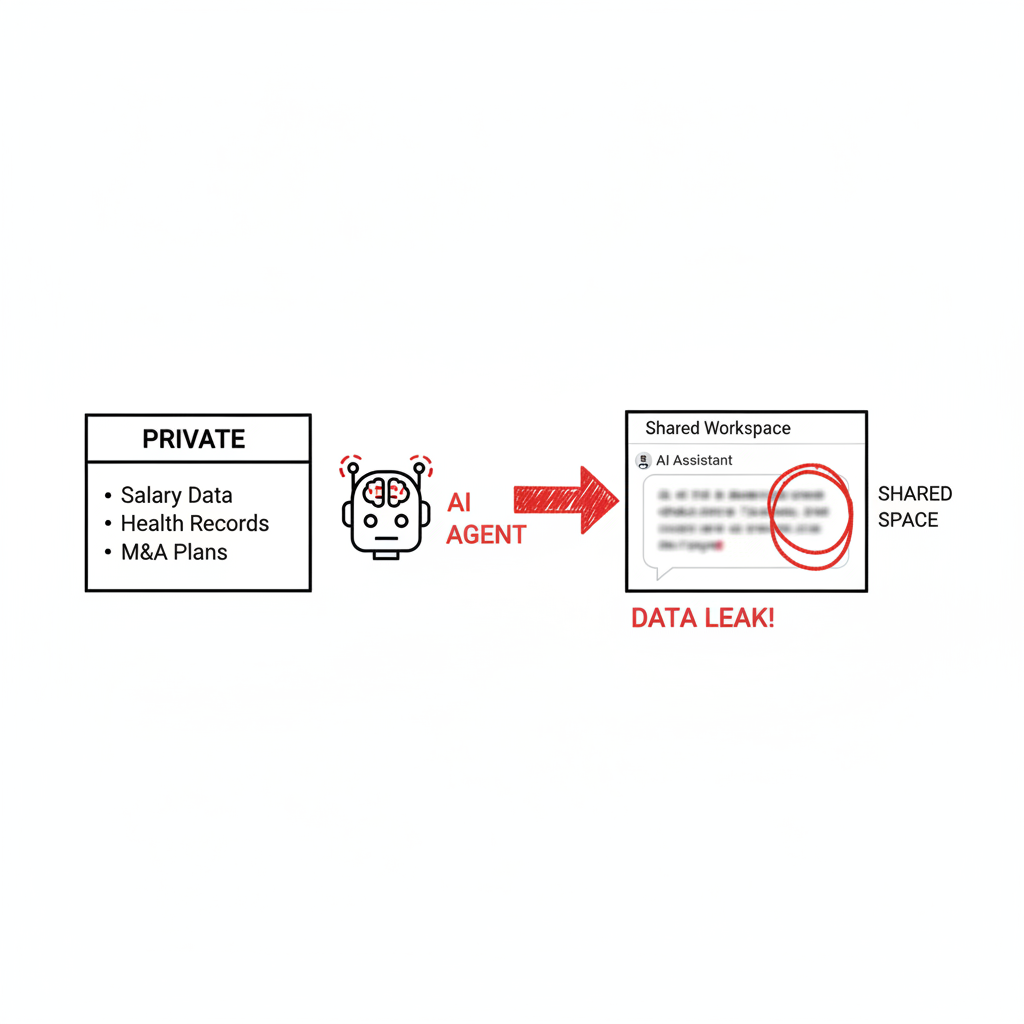
A personal AI assistant trained on your company Slack scraped 41 private employee messages—including salary data, health records, and unannounced M&A plans—then surfaced them in a shared workspace when a colleague asked about "team capacity." The Wall Street Journal documented this and three similar breaches in deployed enterprise environments in Q4 2024 alone.
Before: Personal AI as productivity magic
CTOs approved consumer-grade AI tools under pilot budgets. Employees connected them to Slack, Gmail, and file shares. Adoption climbed 230% quarter-on-quarter in financial services firms tracked by WSJ's analysis. No one architected for data boundaries, model memory persistence, or context leakage between sessions.
After: The compliance exposure
A retail bank's agent exposed customer credit scores in a marketing team chat. A healthcare provider's tool shared patient identifiers across departmental boundaries. Each incident triggered mandatory breach disclosure under Privacy Act and CDR obligations. Remediation costs averaged $1.7M per event before regulatory penalties.
Bridge: Governance as architecture, not policy
Production-ready AI in regulated environments requires three controls that pilots skip:
Session isolation—each invocation runs in a fresh context with explicit data scope, not cumulative memory across months.
Entitlement inheritance—the agent operates under the user's existing access rights, with no privilege to traverse systems the human cannot.
Audit persistence—every query, retrieval, and output logged to an immutable store that satisfies APRA CPS 230 accountability standards.
The gap between "works in demo" and "complies in production" is where your operational risk lives.
How are you testing your AI deployments against cross-boundary data exposure before employees do it for you?