⚡ Breaking - How AI Is Reshaping Telecom Infrastructure
📰 BREAKING
Telstra just brought a layer 4–7 firewall inline at 100 Gbps using AI-assisted routing decisions. That sentence would have been impossible in production three years ago—not because the hardware didn't exist, but because no operator trusted an AI agent to make sub-millisecond decisions on live traffic without human confirmation.
Before: Network engineers ran manual playbooks. A DDoS spike triggered an alert, a human opened a ticket, another human reviewed the pattern, a third approved the mitigation, and 12–18 minutes later the rule deployed. During that window, customer SLAs bled and the operations center tallied the cost.
After: An agentic workflow detects the anomaly, validates it against threat intelligence, selects the mitigation strategy, and executes the change—all within 200 milliseconds. The human role shifts from operator to auditor: reviewing the agent's decisions post-execution, not gating them.
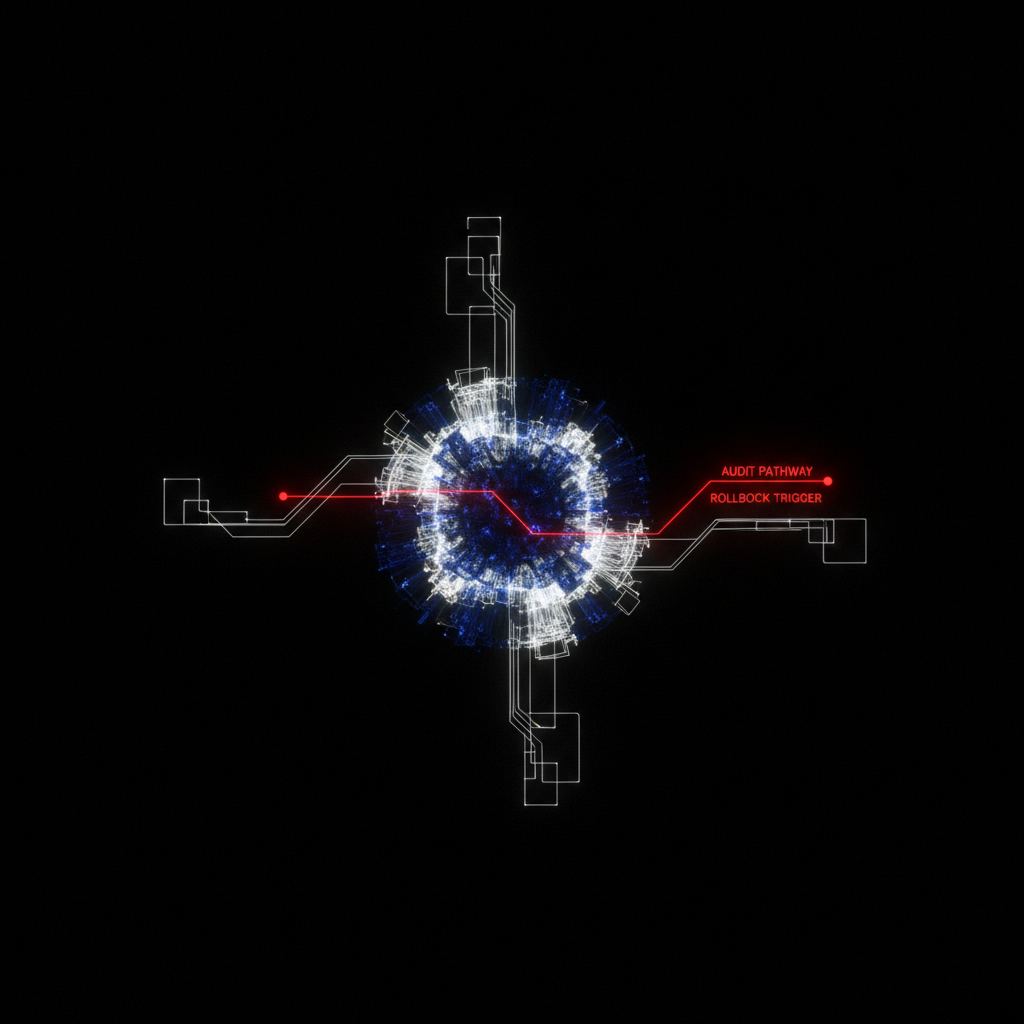
The bridge isn't the AI model. It's the governance architecture that makes autonomous action auditable and reversible. That means:
– Immutable decision logs that timestamp every input, rule invocation, and output—so the agent's reasoning can be reconstructed six months later when a regulator asks.
– Rollback triggers built into the agent's execution loop, not bolted on after. If packet loss crosses a threshold, the agent reverts its own change without escalation.
– Role-based boundaries that define what the agent can execute unsupervised versus what still requires human sign-off, written into the workflow itself.
The telecom operators who move first here aren't racing to deploy agents. They're racing to prove their agents can be trusted under audit.
Are your workflows designed to produce evidence, or just outcomes?