The Biomolecular Model Moment: Why Your Next MarTech Stack Needs AI That Can Model Complexity
```json
{
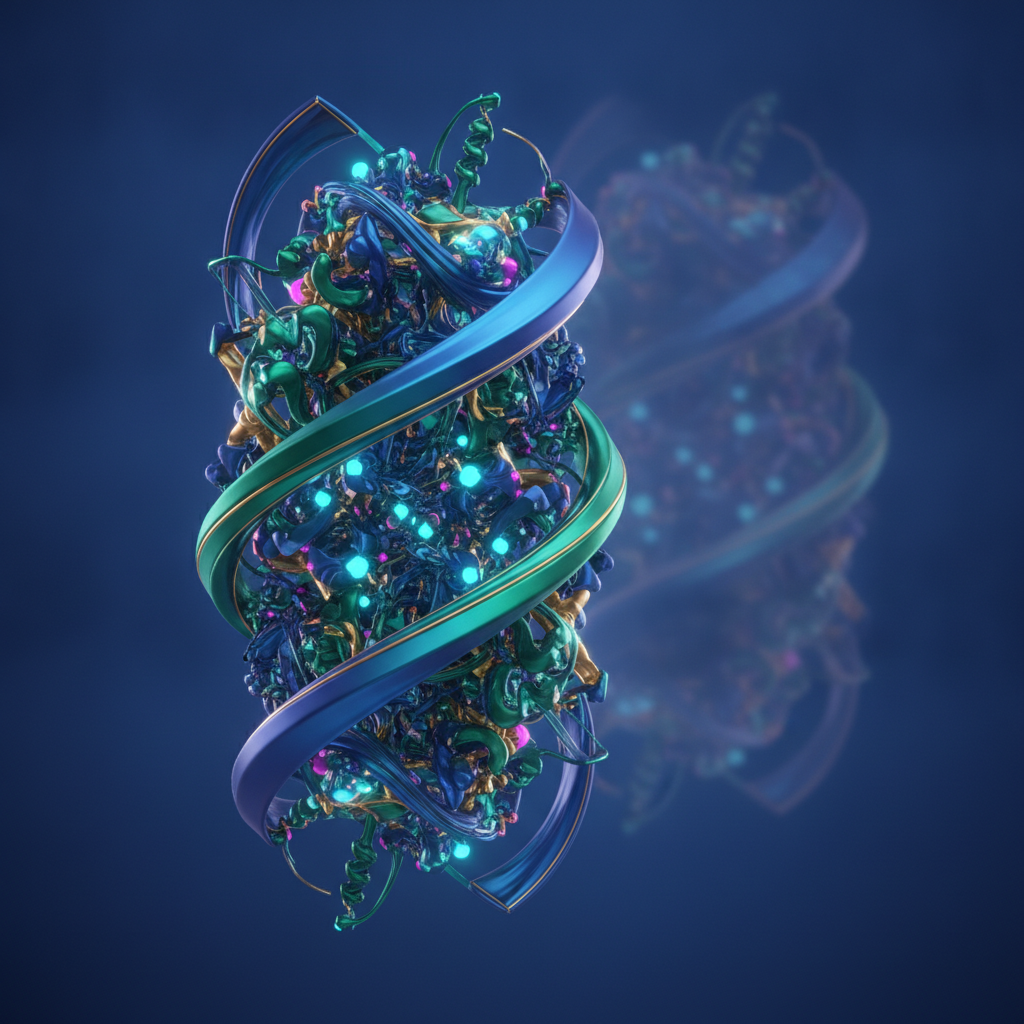
"caption": "Claude just optimized 30+ biomolecular prediction models in four weeks — 4x faster inference, 2x with identical outputs — and that tells you more about where AI tooling is heading than any product release deck.\n\nThe compression matters more than the application. An internal research model rewrote open-source genomics and protein design models to run on a single GPU node for systems over 10,000 tokens. The same capability that collapsed GPU hours by 100x in drug discovery will land in customer journey models, fraud graphs, and conversion attribution stacks by Q2.\n\nWe've spent three years teaching marketing AI to find patterns. The next 18 months are about models that reason through causality in multi-variable systems — the gap between "these users converted" and "if we change this variable, conversion moves."\n\nThe deck walks through the mechanism, the numbers, and what it means for anyone running inference at scale.\n\n#AIStrategy #MarTech #CustomerIntelligence #MachineLearning #EnterpriseAI",
"carousel_title": "Claude's Biomolecular Breakthrough and Your MarTech Stack",
"primary_source_url": "https://news.google.com/rss/articles/CBMie0FVX3lxTE5PbzNJUlpWVXZ6VzVsNU13YVBoQUNmTDNEUG83cTFoZk1oU0ZQMFJCWFhqNTFZSGVZWkg3RjBRNktiaXZjd1ZoNTRLM3NpS2V4a3lVUXRJVXFDbXVwRmhfdDlPSy04ZVBzUHB3aHFEUjRtcHVzd0dvN0NYMA?oc=5",
"slides": [
{
"headline": "AI Just Learned to Optimize Itself",
"body": "Claude optimized 30+ biomolecular models in four weeks, achieving 4x average speedup and near-identical outputs at 2x — compression capability that translates directly to enterprise inference.",
"layout": "standard"
},
{
"headline": "4x faster",
"body": "Average speed gain across 30+ models",
"layout": "stat"
},
{
"headline": "The Technical Mechanism That Matters",
"body": "An internal research model rewrote genomics, protein design, and structure prediction models to run systems larger than 10,000 tokens on a single NVIDIA GPU node. Memory optimization unlocked scale previously impossible without massive infrastructure.",
"layout": "standard"
},
{
"headline": "100x Fewer GPU Hours, Same Performance",
"body": "Claude's earlier protein design work required $10,000 per target — roughly 2,500 H100 GPU hours. The optimized approach delivers comparable in silico results using two orders of magnitude fewer GPU hours, making the work accessible beyond elite labs.",
"layout": "standard"
},
{
"headline": "Before vs. After",
"body": "Before: 2,500 H100 GPU hours per protein target\nAfter: 100x compression with comparable accuracy",
"layout": "compare"
},
{
"headline": "What This Opens for MarTech Infrastructure",
"body": "The same compression that collapsed biomolecular modeling costs will hit customer intelligence platforms next. Models that reason through multi-variable causality — not just correlation mining — become viable at production scale when inference costs drop two orders of magnitude.",
"layout": "standard"
},
{
"headline": "Open-Source Code Released September 17",
"body": "All optimized model code is available now, with technical report published. Adaptyv Bio co-sponsors a protein design competition backed by $1M in Claude credits, $250K in Modal compute, and wet lab validation for 5,000+ designs.",
"layout": "standard"
},
{
"headline": "Inference Cost Governs Model Ambition",
"body": "When running a model drops from thousands to tens of dollars, the questions you can ask change. Customer journey models graduate from segment clustering to causal simulation — testing intervention effects before deployment, not after.",
"layout": "standard"
},
{
"headline": "What to watch in your stack",
"body": "Conversion prediction accuracy vs. compute cost\nCausal modeling in attribution platforms\nReal-time graph inference on single nodes\nMemory-optimized sequence models at 10K+ token scale",
"layout": "list"
},
{
"headline": "AI That Optimizes AI Changes Build Economics",
"body": "Models that rewrite other models for speed and memory efficiency compress the cost curve faster than hardware scaling alone. The capability demonstrated in biomolecular work — 4x average speedup, 2x with identical outputs — applies to any deep learning inference workload.",
"layout": "standard"
},
{
"headline": "Follow for AI-native commercial strategy",
"body": "I write on AI infrastructure, customer intelligence, and commercial systems — grounded in $1.2B+ digital revenue builds across regulated markets.",
"layout": "standard"
}
]
}
```
📩 The full weekly breakdown lands in AI — Daily Brief → https://amplyfy.app/wire/subscribe/1